
Concrete Sleeper Retaining Walls for Newcastle, NSW
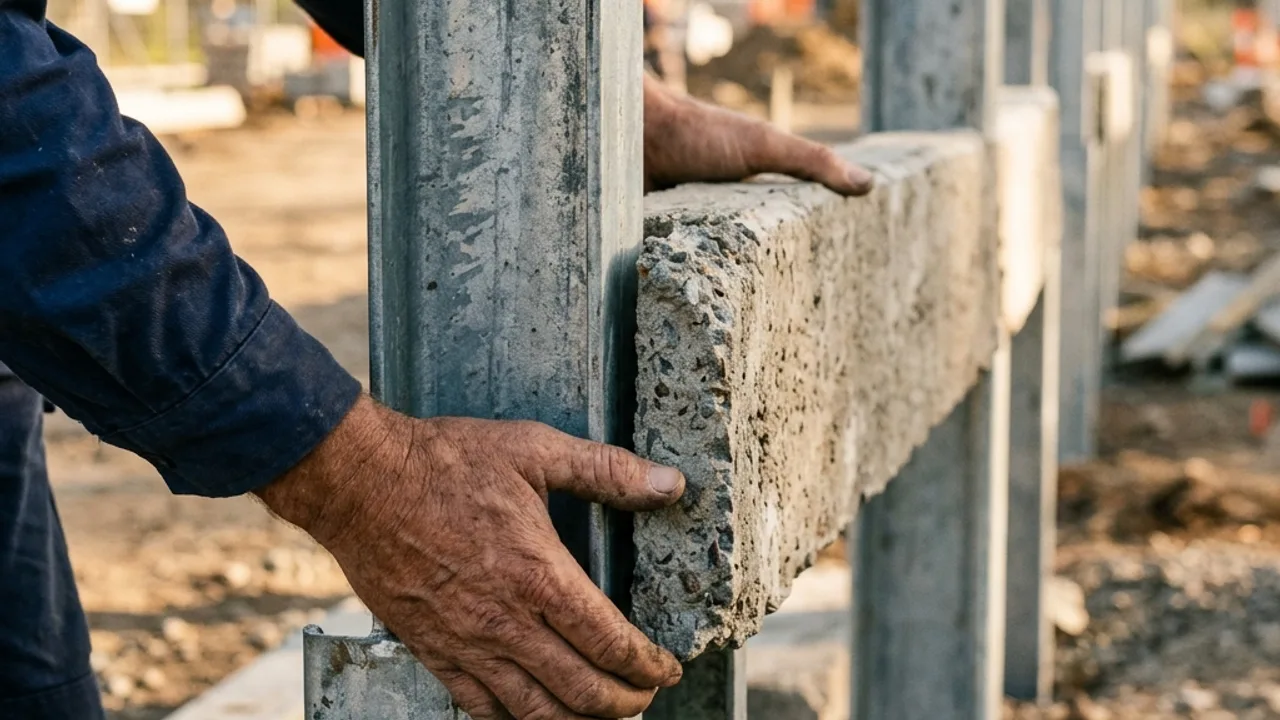
Steel-reinforced concrete sleepers set between galvanised posts - a durable, low-maintenance wall for Newcastle's sloping suburban blocks.
A retaining wall Newcastle homeowners can rely on
Concrete sleepers slot between galvanised steel H-posts to form one of the most common retaining wall builds on Newcastle's sloping suburban blocks. The steel-reinforced sleepers resist rot and termites, which matters on older cut-and-fill streets in suburbs like Adamstown and New Lambton where a timber wall from the 1970s or 1980s is often the thing being replaced. When you get in touch, we ask about your wall's height, what it is retaining (a driveway, a garden terrace, a house platform), and whether the block has any existing drainage, so your licensed contractor can quote accurately from the start.
Who this is for: Suits homeowners replacing a failed timber wall, or building a new wall over about 600mm where a durable, mid-cost material is the priority.
What's included
Galvanised H-post supply and installation to engineered spacing
Concrete sleeper supply and fitting, standard or custom lengths
Capping and finishing along the top edge
Site assessment for post depth and soil bearing
Coordination with drainage work where the wall needs it
Indicative cost
Concrete sleeper walls in Newcastle are commonly quoted around $240 to $570 per lineal metre, with some jobs averaging closer to $330-$450. That range covers standard post-and-sleeper construction; costs rise once engineering, deeper footings, or difficult site access come into play. These figures are indicative only - they exclude GST, excavation, drainage and engineering, and your licensed contractor will always confirm a fixed price in writing before work starts.
What matters on Newcastle sites
On Newcastle's coal-measures clay suburbs - Mayfield, Wallsend, Waratah and similar areas - ground movement with the seasons is more pronounced than on the sandy or sandstone-based blocks nearer the coast. A concrete sleeper wall's rigidity handles that better than timber, but it still needs proper drainage behind it; skipping that step is the most common reason a concrete sleeper wall fails early regardless of the material's own strength.
How it works
Step 1
Enquire
Tell us your wall's rough length, height and what it retains.
Step 2
Your Contractor
A licensed local contractor experienced in this material handles the job, quoting and contracting with you directly.
Step 3
Discuss
The contractor visits or reviews photos, confirms whether engineering applies, and scopes the job.
Step 4
Quote
You receive a written, itemised quote before any work begins.
Why choose this approach for concrete sleeper retaining walls
Steel-reinforced strength
Concrete sleepers carry more load than timber for a similar cost, which suits taller garden and driveway walls.
Long service life
No rot risk the way treated timber has, which matters on Newcastle's older, damper cut-and-fill blocks.
Engineering-ready
The post-and-sleeper system scales cleanly into an engineered design once a wall crosses the exempt-development threshold.
What to check before you sign off on a sleeper wall
Three details separate a sleeper wall that lasts from one that leans inside a decade, and none of them are visible once the job is backfilled. The first is post embedment: the depth a galvanised H-post is set into concrete follows from the retained height and the bearing capacity of the soil, not from a rule of thumb, and it is the single item most worth having written into your quote. The second is sleeper span and thickness, because a sleeper rated for a 1.8 metre post spacing behaves differently at 2.4 metres. The third is the top course, where a capping detail and a slight back-slope keep surface water off the face rather than letting it run down behind the sleepers.
Concrete Sleeper Retaining Walls FAQs
What is the best retaining wall material for Newcastle?
How much does a concrete sleeper retaining wall cost?
Is a timber retaining wall cheaper than concrete sleepers?
What does a concrete sleeper retaining wall cost in Newcastle?
Concrete Sleeper Retaining Walls across Newcastle
Pick your suburb for the local notes, or submit the form for a free review.
Talk to a specialist
Ready to get help with concrete sleeper retaining walls?
Share the details and we will help you take the next step with confidence.