Sandstone & Boulder Retaining Walls for Newcastle, NSW
Quarried and reclaimed sandstone block and natural boulder walls, battered back for a durable finish that suits Newcastle's exposed coastal headland sites.
A retaining wall Newcastle homeowners can rely on
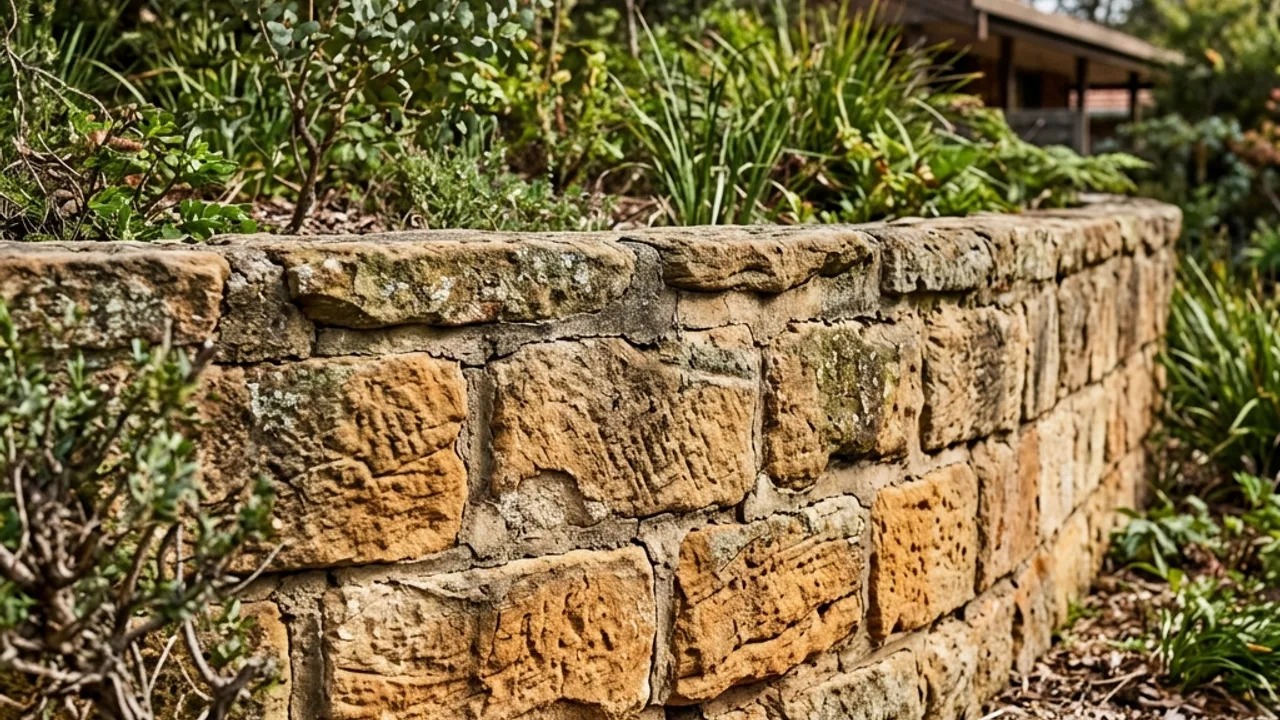
Sandstone is the traditional retaining material across much of the Newcastle region - the same Permian coal-measures sandstone that forms the headlands at Nobbys and along The Hill turns up as building stone in older retaining work across the city's ridge and coastal suburbs. Quarried or reclaimed sandstone block, or a natural boulder wall battered back into the slope, gives a durable, distinctly local finish that concrete or timber cannot match. It costs more because of the material and the labour of handling and placing heavy stone, which we're upfront about from the first conversation.
Who this is for: Suits homeowners wanting a premium, distinctly local finish, especially on headland, ridge or coastal blocks where sandstone already features.
What's included
Quarried sandstone block wall construction
Reclaimed sandstone block work where matching existing stone is wanted
Natural boulder wall battered back for a rugged finish
Natural stone landscaping around the retaining structure
Access and handling assessment for heavy-stone delivery
Indicative cost
Sandstone retaining walls generally sit at the higher end of the material range, with Newcastle pricing commonly shown around $330 to $665 per lineal metre. The premium reflects both the stone itself and the labour of handling and placing it safely, particularly on a sloped or narrow-access block. This is indicative only; your licensed contractor confirms a fixed price once they've seen the site and your access constraints.
What matters on Newcastle sites
Newcastle sits on Permian coal-measures rock that includes genuine sandstone units, most visibly along the coastal headlands and ridge suburbs like Newcastle East and The Hill. That means a sandstone wall here is a locally sourced-feeling choice rather than an imported look, and it also means excavation on some of these same blocks can hit shallow bedrock, which is worth flagging to your contractor early rather than discovering mid-dig.
How it works
Step 1
Enquire
Tell us your site access and whether you want quarried block or a boulder finish.
Step 2
Your Contractor
A licensed local contractor experienced in stone retaining quotes and contracts with you directly.
Step 3
Discuss
The contractor assesses site access, since heavy stone often needs a crane or careful hand-placement.
Step 4
Quote
You receive a written, itemised quote before any work begins.
Why choose this approach for sandstone & boulder retaining walls
A genuinely local material
Sandstone suits Newcastle's own coastal and ridge-top geology rather than being trucked in from elsewhere.
Built to last
A well-built stone wall is one of the longest-lasting retaining options available.
Upfront on access cost
We flag site-access and handling cost drivers before you commit to a quote, not after.
Batter, bedding and where the stone comes from
A sandstone wall works by mass and friction rather than by reinforcement, so the two things that decide whether it holds are the batter and the bedding. Battering the face back into the slope puts the weight of each course over the one below, and that is what keeps a dry-laid wall standing without steel. Bedding matters just as much: each block wants full contact on a compacted base rather than a rocking three-point contact that concentrates load on one corner. Stone supply is the other variable in your quote. Reclaimed sandstone salvaged from demolition carries weathered faces and irregular sizes, while quarried block is dimensionally consistent and quicker to lay, and the two rarely price the same for a finished metre.
Sandstone & Boulder Retaining Walls FAQs
How long do timber retaining walls last?
How much does a sandstone retaining wall cost?
How much does a retaining wall cost in Newcastle?
Are retaining wall failures covered by home insurance?
Sandstone & Boulder Retaining Walls across Newcastle
Pick your suburb for the local notes, or submit the form for a free review.
Talk to a specialist
Ready to get help with sandstone & boulder retaining walls?
Share the details and we will help you take the next step with confidence.