
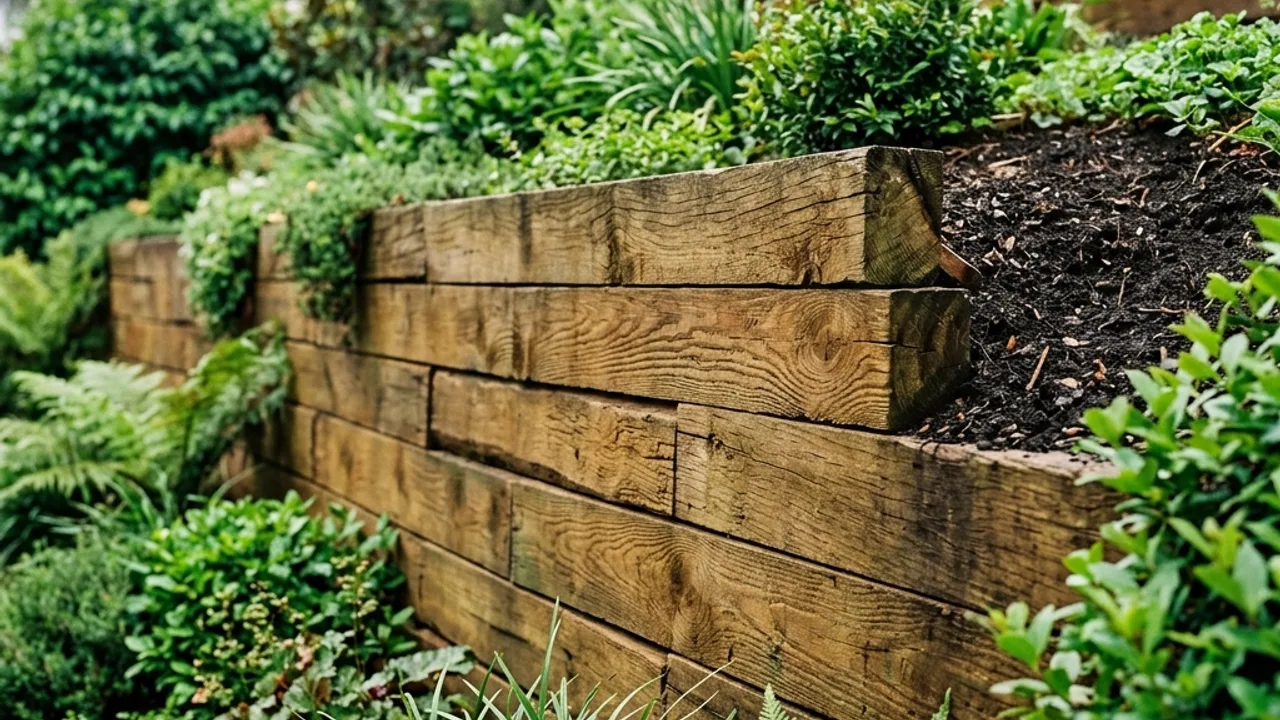
Timber Sleeper Retaining Walls for Newcastle, NSW
H4-treated hardwood and pine sleeper walls for terraced gardens and low boundary retaining across Newcastle's older cut-and-fill blocks.
A retaining wall Newcastle homeowners can rely on
Timber sleeper walls are the most affordable common option for a low garden terrace or boundary retaining job, and they are everywhere across Newcastle's established suburbs - most of the region's split-level, cut-and-fill housing stock from the post-war decades was originally terraced with hardwood or pine sleepers. H4-treated pine is the standard modern choice for in-ground use; hardwood costs more but handles exposure and knocks better. If your existing timber wall is 20 or 30 years old and starting to lean or rot, this is often a repair-versus-replace decision rather than a straightforward new build - we help you work out which.
Who this is for: Suits budget-conscious garden terracing, and homeowners deciding whether a leaning or rotting timber wall needs a repair or a full rebuild.
What's included
H4 treated pine sleeper walls for gardens and low boundaries
Hardwood sleeper walls where a firmer, longer-lasting timber suits the site
Terraced garden bed construction on sloping blocks
Post setting to the correct depth for the wall height and soil type
Assessment of an existing timber wall for repair versus full replacement
Indicative cost
Timber sleeper walls in Newcastle are commonly listed around $190 to $430 per lineal metre, with a typical mid-range closer to $305. Very small garden edging walls can land under $1,000 in total. As with any material, this is indicative only - final pricing depends on wall height, ground access, drainage requirements and whether posts, sleepers and excavation are all included in the quote, which your licensed contractor will set out in writing.
What matters on Newcastle sites
Newcastle's older suburbs are full of split-level blocks originally terraced with timber during the post-war building boom, and a lot of that stock is now 30 to 60 years old. If your existing wall is starting to lean, rot or shed sleepers, it's genuinely worth having it assessed rather than assuming a full rebuild is the only option - see our retaining wall repairs service for that specific decision.
How it works
Step 1
Enquire
Tell us the wall's length and height, and whether it's new or replacing an existing timber wall.
Step 2
Your Contractor
A licensed local contractor experienced in timber retaining quotes and contracts with you directly.
Step 3
Discuss
The contractor assesses the site and, for existing walls, whether repair is genuinely enough.
Step 4
Quote
You receive a written, itemised quote before any work begins.
Why choose this approach for timber sleeper retaining walls
The budget-friendly option
Timber sleepers are usually the cheapest common retaining material, without cutting corners on a properly built wall.
Suits low garden walls
A natural fit for terraced beds and boundary walls under the height where engineering kicks in.
Honest on lifespan
We explain realistic service life against concrete or sandstone up front, not after you've committed.
How long a timber wall actually lasts on a Newcastle block
Timber is the cheapest way to hold a low terrace and the least forgiving of a wet, badly drained site, which is why service life varies so much between two apparently identical walls. Rot almost always begins in the same place: the zone just below finished ground where the post is alternately wet and dry, not at the sleeper faces you can see. H4 treatment is rated for that in-ground exposure and H3 stock is not, so the treatment stamp is worth confirming rather than assuming. Hardwood costs more per metre and takes knocks better, which matters where a mower, a wheelbarrow or a driveway edge will hit the wall regularly. Keeping soil off the top of the sleepers buys years at no cost at all.
Timber Sleeper Retaining Walls FAQs
How much does it cost to replace an old timber retaining wall?
What is the cheapest retaining wall option?
Is sandstone a good option for retaining walls in Newcastle?
How much does a retaining wall cost per square metre?
Timber Sleeper Retaining Walls across Newcastle
Pick your suburb for the local notes, or submit the form for a free review.
Talk to a specialist
Ready to get help with timber sleeper retaining walls?
Share the details and we will help you take the next step with confidence.